

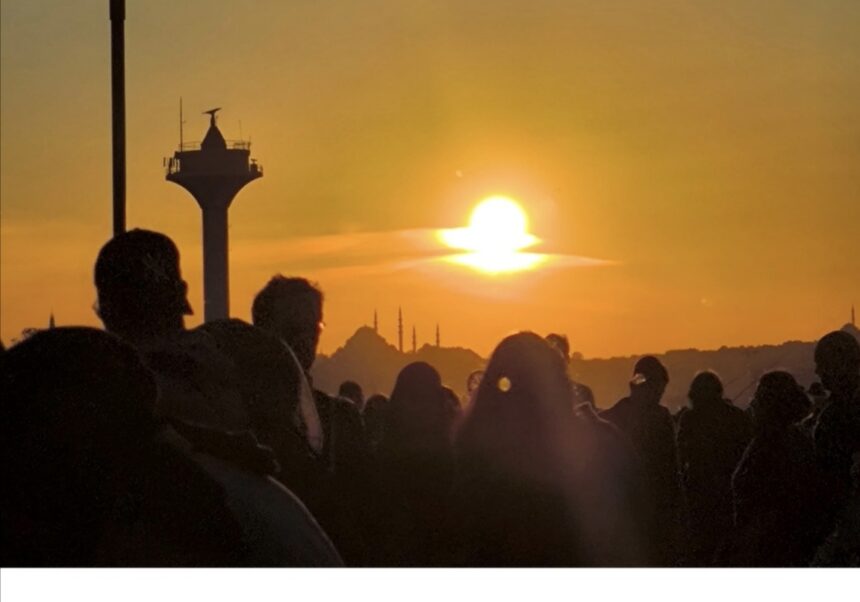
- 1) Istanbul’s Ability to Generate Experience Without Design: Spontaneous Moments and Serendipity
- 2) “Everyday Life Tourism” and Istanbul: The Interweaving of Tourist and Urban Life
- 3) Creative Tourism: From “Seeing” to Participating and Building Relationships
- 4) Experience Economy and the Affective City: The Sensory Density of Istanbul
- 5) Istanbul’s Global Narrative: A Multilayered Urban Image and “Rediscovery”
- 6) The Old Tourist vs. the New Tourist: From an Orientalist Gaze to the Search for Relationship and Experience
- 7) Non-Isolated Cultural Layers: Istanbul’s Core Distinction
- 8) Intellectual and Artistic Density: A Matter of Capacity
- 9) Subcultures and Marginal Figures
- 10) Non-Human Actors: Cats, Dogs, and Public Space
- 11) Space, Light, and Stage: The Bosphorus as a Shifting Set
- 12) Historical Layers Performing Simultaneously
- 13) Permeability Between Neighborhoods
- 14) Informal Settlements and the Coexistence of the Formal City
- 15) Complexity Arising from Layers: The Structural Ground of Experience
- An Objective Perspective
- Istanbul’s Core Advantage: Its Lack of Homogenization
- Notes for the Prospective Traveler
Why We Are Not Obliged to Love Istanbul
As someone born and raised in Istanbul, I cannot say that I love this city; yet, like many Istanbulites, I have not lost my admiration for its capacity to surprise. In many Western cities, the city often resembles a mother: a place of shelter, security, and belonging. Istanbul is not perceived in this way. For many who live here, it is a city to be conquered or overcome—at times even an object of open resentment.
For this very reason, Istanbul’s appeal does not stem from being a city that people either love or hate. Istanbul has no concern with making itself lovable; it already knows it is beautiful. What it does not refrain from, however, is playing with the human mind. Constantly and uninterruptedly, it produces moments that linger in memory: sometimes during a ferry crossing, sometimes in a side street, and sometimes while doing absolutely nothing at all.
This text seeks to understand where these moments come from. It will not tell you what to eat or which museum to visit; it is not a tourist guide. Its aim is to establish a framework that makes it easier to grasp why Istanbul is so compelling—and where this sense of attraction is nourished.
Because the real change concerning Istanbul is not found in numbers, but in modes of contact. More people are coming to the city, but that is not the point. The real shift lies in how Istanbul is being experienced. It is no longer approached as a destination “consumed” along predefined routes, but lived as an environment that generates spontaneous experiences from within everyday life. This perspective aligns with contemporary debates on urban tourism, which regard tourism not as a checklist of sights to be seen, but as a form of lived experience produced through one’s interaction with the city itself.
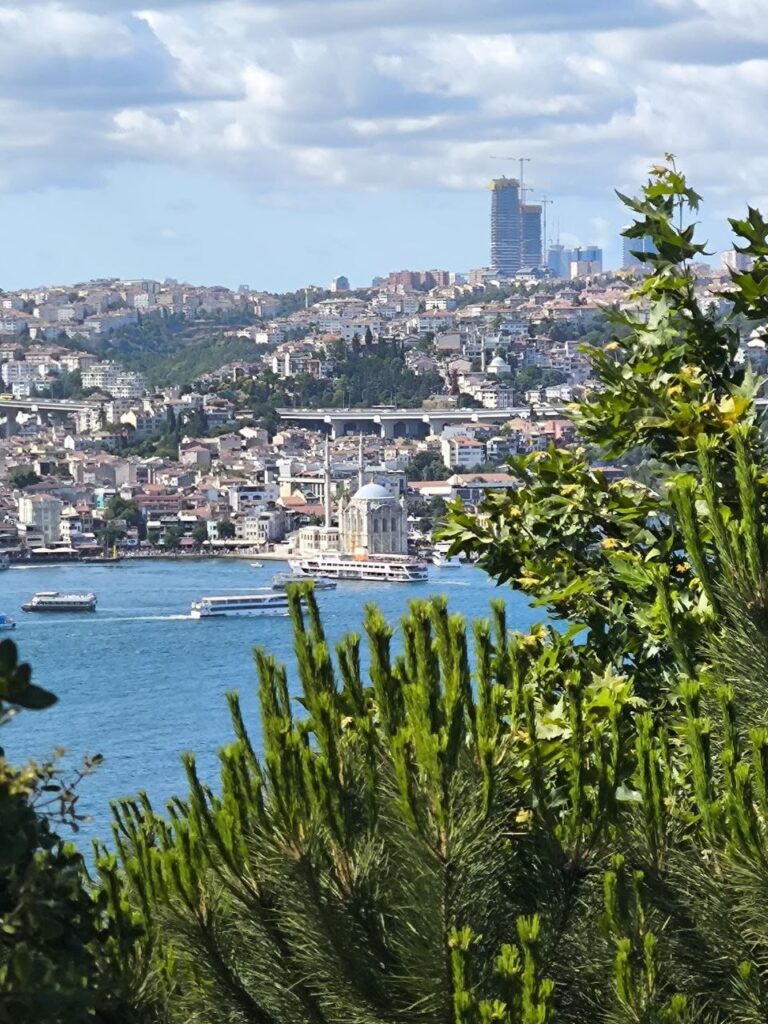
What we refer to as an “experience city” is not an entertainment machine that continuously offers visitors carefully planned activities. Rather, it emerges in cities where diverse ways of life coexist within the same space, where public space remains strong, and where the rhythm of the street has not been flattened into uniformity. Within this framework, experience is constructed not as a designed stage, but through moments that arise spontaneously from the flow of everyday life.
As someone who lives in Istanbul, I experience this transformation not by observing it from the outside, but from within the flow of everyday life. Despite the passing years, the city continues to remain an intriguing place for me as well. Even on my daily commute from home to work, like many Istanbulites, I carry my camera with me. Yet over time, I have noticed something striking: on certain days, the Turkish voices once heard along these familiar routes have become almost nonexistent.
These small, unplanned, and often unnamed moments are not incidental to the Istanbul experience; they are a structural part of it. What gives the city its strength is not an attempt to deliberately produce such moments, but its refusal to suppress them. Much of Istanbul’s experiential quality arises precisely from this condition.
1) Istanbul’s Ability to Generate Experience Without Design: Spontaneous Moments and Serendipity
One of the elements that gives strength to urban experience is the small surprises a visitor encounters within the city—unpredictable, yet not entirely uncontrolled. In urban studies literature, this condition is discussed through the concept of serendipity, and more recently, alongside digital tools, under the notion of planned serendipity. People wish to lose themselves in the city, while simultaneously holding on to maps, recommendation systems, and real-time information. Experience emerges precisely from the overlap of these two states—control and uncertainty.
Istanbul’s neighborhood fabric, pedestrian scale, and strong public life provide fertile ground for such experiences to unfold. The critical point here is this: Istanbul’s appeal is not carried by a single “list of icons.” The city often moves the visitor from one place to another, while embedding the real experience in between. A brief conversation on a ferry, a piece of music heard while waiting at the waterfront, a suddenly revealed view in a side street, or stumbling into an unexpected courtyard—these are not “programmed” events, but byproducts of contact with the city. In large cities, the transformation of everyday life itself into an object of touristic interest is explained precisely through these micro-experiences.
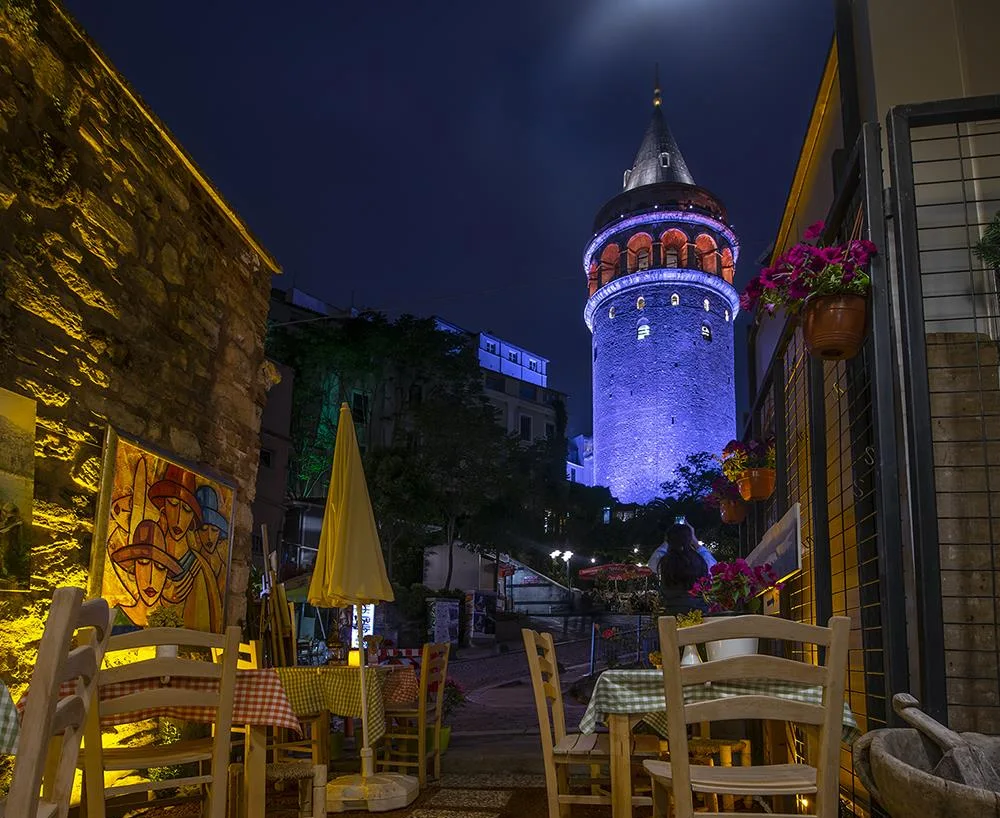
2) “Everyday Life Tourism” and Istanbul: The Interweaving of Tourist and Urban Life
Recent studies in urban tourism emphasize that the tourist is no longer merely a figure who visits monuments, but has become an actor seeking to experience urban life itself. The search for the “living city” elevates the importance of neighborhoods beyond classical tourist centers, local markets, everyday food practices, and public space. To the extent that everyday life in Istanbul is lived intensely on the street, the city offers a natural response to this search.
There is another aspect of this situation that works in Istanbul’s favor: the distinction between tourist and resident is not always clearly drawn. On the same ferry, in the same marketplace, or while waiting in the same queue, roles easily overlap. The literature notes that tourist and local practices mutually transform one another; everyday life sometimes becomes “touristified,” while tourism itself simultaneously becomes part of everyday life. The strong sense of experience felt in Istanbul largely stems from this permeability.
3) Creative Tourism: From “Seeing” to Participating and Building Relationships
The literature on creative tourism demonstrates that contemporary urban experience is shifting away from observation and consumption toward participation and production. The work of Greg Richards and related studies emphasize that contact with local culture, creative practices, and encounters enhances experiential value. Istanbul’s crafts traditions, street culture, music scene, food rituals, neighborhood-based production networks, and multilayered cultural environment provide a fertile background capable of sustaining such participatory experiences.
The key aspect of creative tourism is not purchasing authenticity as a spectacle, but forming a relational experience within local life itself. In Istanbul, this often occurs spontaneously, as the city generates high levels of diversity and dense interaction. Experience frequently takes shape as a brief yet lasting encounter—short-lived, but deeply resonant.
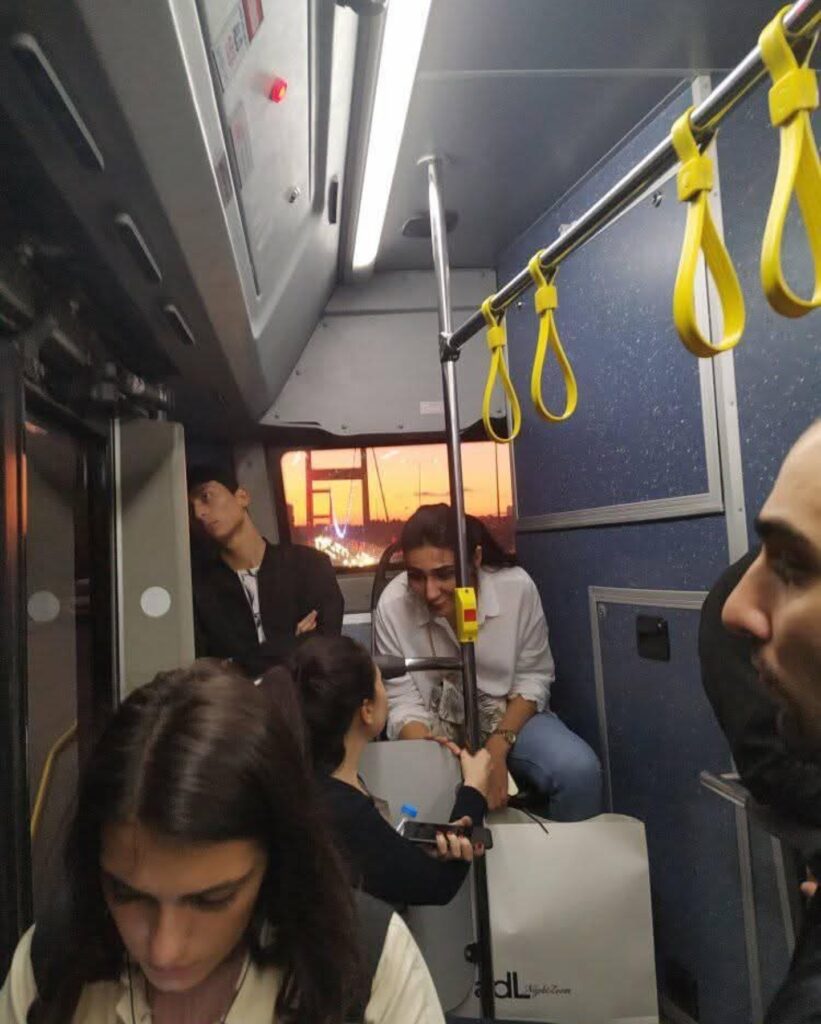
4) Experience Economy and the Affective City: The Sensory Density of Istanbul
Discussions on the experience economy and the affective city show that cities now compete not only through infrastructure and services, but also through emotion, atmosphere, and sensory intensity. One of Istanbul’s clearest advantages lies in the strength of these sensory layers: sound, scent, crowds, the shoreline, steep streets, crossings, and sudden shifts in perspective.
These qualities do not always produce comfort. Yet for the traveler who seeks experience, they generate exceptional memorability and intensity. An objective point should be emphasized here: Istanbul’s pull does not come from promising perfect order, but from the fact that it has not fully surrendered to the sterile urban aesthetic of the modern world. This may not appeal to everyone; however, it is a well-established fact that controlled uncertainty—combined with high stimulation—can be a powerful draw for certain profiles.
5) Istanbul’s Global Narrative: A Multilayered Urban Image and “Rediscovery”
The rediscovery of Istanbul cannot be explained solely through contemporary social media trends. Studies on city branding and urban imagery show that Istanbul has been positioned internationally through different narratives across different periods. Over time, these narratives have moved away from a single-faced representation and evolved into a multilayered structure.
Religious heritage, historical strata, modern life, coastal culture, and neighborhood practices can coexist within the same narrative without excluding one another. What gives Istanbul its strength is the ability of the symbolic and the everyday to appear within the same frame. As world cities increasingly become homogenized, such unresolved complexities cease to be a disadvantage and instead turn into a distinctive value for certain audiences.
6) The Old Tourist vs. the New Tourist: From an Orientalist Gaze to the Search for Relationship and Experience
This multilayered urban narrative, however, is not merely a matter of image. How it is experienced depends largely on visitors’ expectations and the forms of contact they establish with the city. It is precisely at this point that the difference between the “old tourist” and the “new tourist” in Istanbul becomes visible.
In the relatively recent past, Istanbul was perceived by many visitors as a distant stage to be observed. Historical heritage and everyday life were often consumed as exotic scenery, with limited contact with local life. This gaze reproduced an urban perception aligned with the orientalist patterns long carried by modern tourism.
The contemporary tourist profile points toward a different orientation. Today’s visitors seek not merely to see or document, but to establish contact with the city, to experience it, and to become part of that experience. Here, experience emerges not from large-scale productions, but from small yet meaningful interactions: adapting to neighborhood rhythms, returning to local places, and sharing public space with residents.
What works in Istanbul’s favor is this: the city generates these zones of encounter and experience largely from within its own everyday life. For those open to contact, Istanbul often leaves deeper and more lasting traces than expected. It is reasonable to say that a significant portion of new tourists genuinely find—or at least hope they have found—the sense of experience and connection they seek.
7) Non-Isolated Cultural Layers: Istanbul’s Core Distinction
One of the fundamental characteristics that sets Istanbul apart from other cities of comparable scale is the ability of different cultural and ideological groups to exist within the same urban scene without being rigidly segregated. The model of cultural islands or fully homogeneous neighborhoods, common in urban sociology, operates only to a limited extent in Istanbul.
Religious communities, secular intellectuals, leftist circles, anarchist groups, youth subcultures, and migrant communities share the same public spaces at different times and in different contexts. This contact does not always produce harmony; yet it does not create entirely disconnected worlds either. Istanbul’s capacity to generate experience is largely nourished by this permeability.
8) Intellectual and Artistic Density: A Matter of Capacity
Istanbul’s attraction cannot be explained solely through its historical heritage. For a long time, the city has hosted a more heterogeneous and productive intellectual and artistic ecosystem than many European cities. This condition relates not to quantity, but to capacity.
Intellectual production in Istanbul is not confined to sterile or closed spaces; it becomes visible on the street, in cafés, and within everyday life. For the visitor, this creates not a culture to be watched from a distance, but an atmosphere one can enter.
9) Subcultures and Marginal Figures
Another element that renders the Istanbul experience distinctive is the visibility of subcultures and marginal figures within public space. Street musicians, night workers, migrants, and youth subcultures form ordinary components of the urban fabric. This prevents Istanbul from becoming a smooth display window and intensifies the experience.
10) Non-Human Actors: Cats, Dogs, and Public Space
The role of non-human actors in Istanbul’s perception as an experience city should not be overlooked. The presence of street animals in public space adds a layer that softens spatial perception and emotionally enriches everyday experience.
11) Space, Light, and Stage: The Bosphorus as a Shifting Set
Explaining the Istanbul experience solely through human relationships would be insufficient. In the city, space itself—light, water, slopes, distance—becomes an active component of experience. This is felt most distinctly along the Bosphorus, which is not merely a geographical feature but a constantly changing stage of light and shadow. The same view produces entirely different atmospheres at different times of day. Experience is shaped not only by “where,” but also by “when.”
12) Historical Layers Performing Simultaneously
The traces of Rome, Byzantium, the Ottoman Empire, and the modern world exist in Istanbul not sequentially, but simultaneously. History is not a past preserved in archives; it is lived as a layer embedded in everyday life. This simultaneity produces Istanbul’s sense of continuity without closure.
13) Permeability Between Neighborhoods
Districts such as Kadıköy, Beşiktaş, Cihangir, Taksim, and Fatih function as nodal points where different lifestyles overlap. Experience does not remain fixed within a single neighborhood; it multiplies through movement between them.
14) Informal Settlements and the Coexistence of the Formal City
Neighborhoods with gecekondu origins and informal settlements blur the center–periphery distinction. The coexistence of planned and unplanned urban fabrics intensifies the Istanbul experience.
15) Complexity Arising from Layers: The Structural Ground of Experience
The complexity of Istanbul is not accidental; it is a structural feature emerging from the simultaneous existence of different orders. Experience takes shape through small decisions and encounters made within this complexity.
Still, one must remember that in Istanbul, you are a tourist.
The Istanbul experience gains meaning not when it is romanticized, but when the tension between generosity and disorder is acknowledged.
Describing Istanbul through the language of a tourist guide misses the city’s true appeal. Its attraction lies in producing experience spontaneously through contact, without packaging it. Experience is measured not by completing a list, but by the traces left by one’s relationship with the city. Istanbul’s rediscovery by the world can largely be explained by the strengthening of this form of relationship.
Defining tourism solely as a mass movement is insufficient; tourism is also a dirty industry. This “dirtiness” stems less from individual intentions than from the nature of the sector itself. Money, time constraints, and information asymmetry create fertile ground for opportunism in every touristic city. Istanbul is no exception in this regard.
The city and its people are often generous. Small gestures—giving directions, offering help, casual conversation—remain strong elements of everyday life and form the living side of the Istanbul experience. At the same time, there are practices that seek to exploit the tourist’s lack of knowledge. These two realities coexist.
This should not be read as a distortion unique to Istanbul. It applies just as much to Rome, Barcelona, Paris, and Venice. The “dirty” side of tourism arises not from the city’s character, but from tourism itself.
The determining difference lies in the residents’ capacity to navigate this structure. Istanbul’s inhabitants, having long learned to live on this unstable ground, often recognize this dirty zone, understand its limits, and act accordingly. The city does not render experience fully sterile, but it offers the visitor an intuitive map—one that can be followed with care.
For this reason, the Istanbul experience is neither entirely “safe” nor entirely “dangerous.” It is shaped within the tension between the city’s generosity and the sector’s impurity. For travelers who accept this tension without romanticizing it, Istanbul continues to offer a powerful and authentic field of experience.
An Objective Perspective
From an objective standpoint, Istanbul today is not a global financial center like New York, does not produce institutional trust like London, and does not promise order like Tokyo.
What it does offer is:
Intense cultural contact, historical simultaneity, and the sustained vitality of everyday life.
Istanbul’s Roman–Byzantine–Ottoman heritage does not operate as an open-air museum in the way it does in many historical cities. History here is not placed behind glass; it is laid beneath everyday life.
This is not always aesthetically pleasing, but it is real. In Istanbul, history is not something merely “looked at,” but something walked upon, passed by, and lived alongside. This disappoints some visitors, while deeply binding others.
Istanbul’s Core Advantage: Its Lack of Homogenization
Over the past 30–40 years, most world cities have undergone a process of homogenization: the same cafés, the same neighborhood aesthetics, the same safe yet sterile public spaces. Istanbul did not complete this process—and paradoxically, this has become its greatest advantage.
This incomplete homogenization produces friction, contradiction, and complexity. But it also produces experience, stories, and memory. Istanbul remains memorable precisely because it is not smooth.
Notes for the Prospective Traveler
This text is not written to idealize or condemn Istanbul. The first note for the prospective traveler is this: Istanbul is not an easily readable city. Experience often forms not through direct encounters, but through indirect contact, repetition, and delay. The city does not seek to be understood at first glance; it demands time.
Another point to consider is Istanbul’s deliberate lack of homogenization. This generates friction, contradiction, and complexity, but also experience, narrative, and memory. Istanbul’s memorability stems largely from this roughness.
The dirty nature of tourism should not be ignored. This dirtiness relates more to the industry than to the city itself. Istanbul is not an exception; yet the residents’ intuitive knowledge indirectly guides the traveler as well.
Istanbul does not guarantee experience. The city does not promise a “good time.” Experience emerges within the tension between generosity and disorder. For travelers who accept this tension, Istanbul remains a genuine and powerful field of experience.
Freedom is traveling.